
Eine Nachricht hinterlassen
Wenn Sie an unseren Produkten interessiert sind und mehr Details erfahren möchten, hinterlassen Sie bitte hier eine Nachricht. Wir werden Ihnen so schnell wie möglich antworten.

Summary: For decades, road cyclists chased narrow tires and high pressure for speed. Today the industry has reversed course. Modern carbon wheels with wide internal rims (21mm–25mm+) are engineered to perform best with 28mm to 38mm tires. This article explains why wider tires deliver lower rolling resistance, improved aerodynamics when matched to a wide rim, greater comfort, and fewer flats — and why 28mm–38mm is the new sweet spot for road, all-road, and gravel.
From 23mm to 32mm: How We Got Here
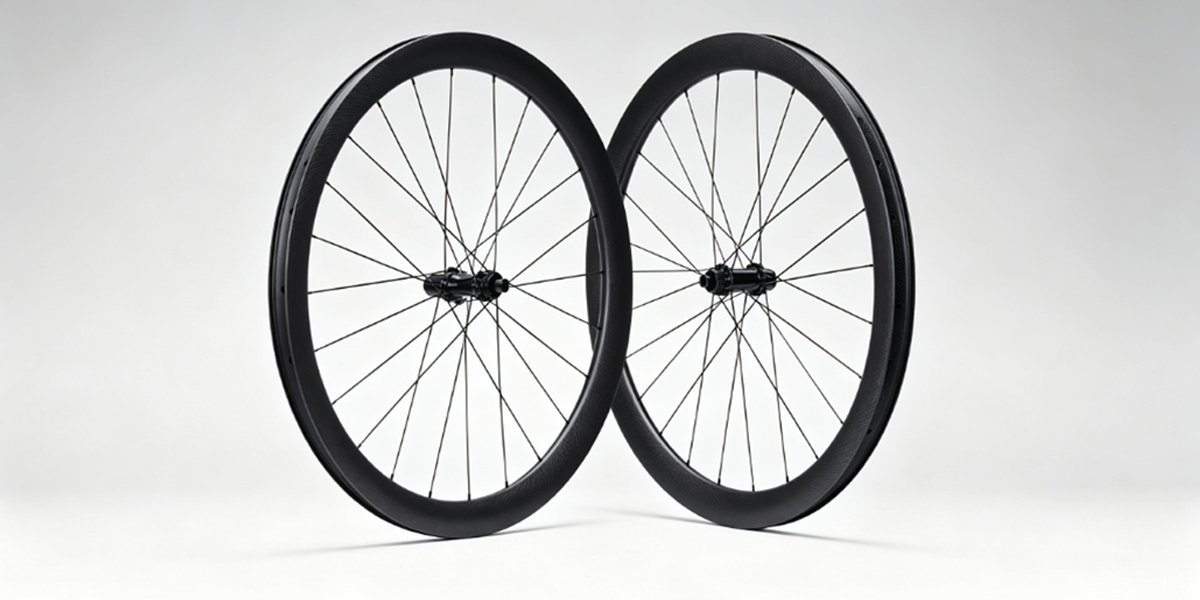
Not long ago, a 23mm tire was the road racing standard and 25mm was "wide." Riders accepted a harsh ride as the price of speed. That assumption is now gone. Independent rolling-resistance testing, wind-tunnel data, and pro peloton adoption have all pushed the industry wider. WorldTour teams now race on 28mm tires; gravel riders routinely run 32mm to 38mm. None of this works without a corresponding shift in carbon wheel design — a wide tire on a narrow rim squashes into a "light bulb" shape, ruining handling and aero. Modern wide rims give the tire a stable, broad platform.
Lower rolling resistance. A narrow tire deforms sharply at the contact patch, wasting energy through casing hysteresis. A wider tire spreads the load, reducing deformation. Tests show moving from 25mm to 28mm or 30mm — at a lower pressure — can save 5–10 watts. That is free speed.
Better aerodynamics. Aerodynamics is where the rim-tire system matters most. A wide tire on a narrow rim creates a turbulent step between sidewall and rim. A wide rim with a smooth transition lets air flow cleanly around the whole wheel. Modern carbon rims are wind-tunnel optimized around specific tire widths — 21mm internal with 28mm–30mm, or 25mm internal with 32mm–38mm.
Comfort equals speed. Wider tires at lower pressure absorb road vibration that would otherwise fatigue the rider. Less vibration means more power transferred over a long ride. On rough surfaces, the comfort advantage is also a control advantage — a tire that tracks the surface instead of bouncing keeps you faster and safer.
Fewer pinch flats. Wider tires have more air volume, absorbing harder impacts before the rim bottoms out. Combined with a wide rim's reinforced bead seat, "snakebite" flats drop significantly.
Why this range specifically? It covers the practical optimum for nearly every road discipline:
Below 28mm, gains diminish. Above 38mm, aero drag and weight offset the benefits for road riding. The 28mm–38mm band is where modern carbon wheel design delivers the most complete package.
Q: Are wider tires really faster?
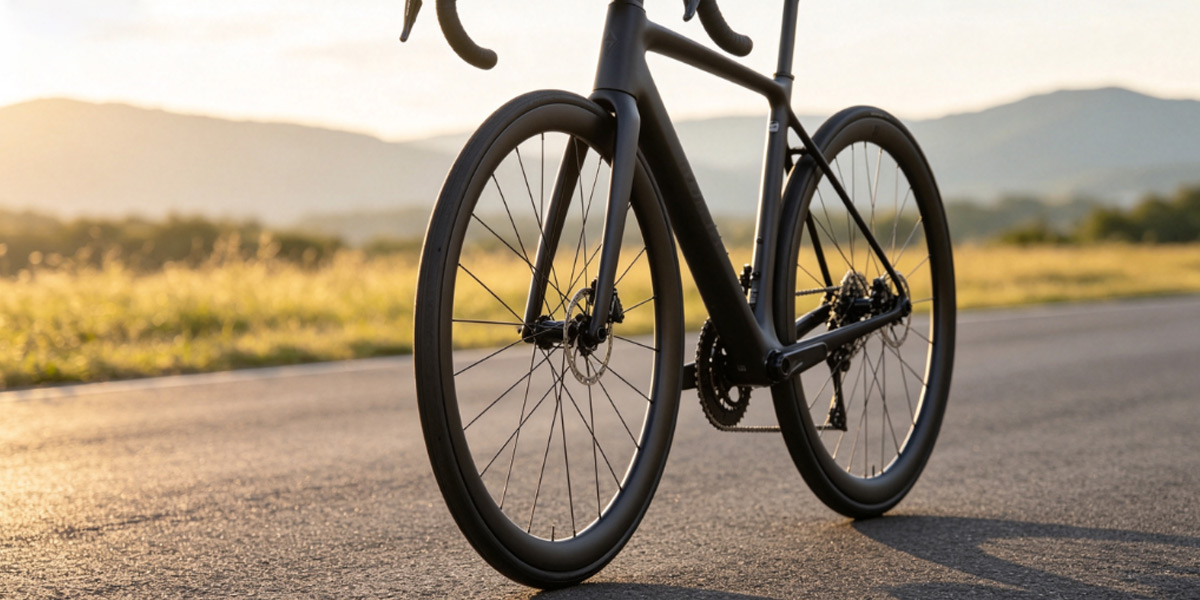
A: Yes. 28mm–30mm tires at lower pressure have lower rolling resistance than 23mm–25mm at high pressure. Paired with a wide aero-optimized rim, the system is faster in real-world conditions.
Q: What pressure should I run?
A: Start lower than you think. A 75kg rider on 28mm / 21mm rim: ~70–80 psi. On 32mm / 23mm rim: ~55–65 psi. Always check tire and rim max-pressure ratings, especially hookless.
Q: Internal vs. external rim width?
A: Internal width (between the rim walls) determines tire shape and is what matters for compatibility. External width includes the sidewalls and affects aero. A "25mm wide" rim usually means external — always check the internal spec.
Q: Are hookless rims safe?
A: Yes, within rated limits. Hookless requires compatible tires and has pressure caps (typically ~72 psi road, lower gravel). Verify your tire is hookless-certified and stay within the rating.


Eine Nachricht hinterlassen
Scannen Sie den QR-Code zu WeChat :

Scannen und zu WhatsApp senden :

 IPv6 NETZWERKUNTERSTÜTZT