
Eine Nachricht hinterlassen
Wenn Sie an unseren Produkten interessiert sind und mehr Details erfahren möchten, hinterlassen Sie bitte hier eine Nachricht. Wir werden Ihnen so schnell wie möglich antworten.

Spokes are an essential component that determines wheel stiffness, weight, ride quality and durability. Many cyclists get confused when choosing between carbon spokes and traditional steel spokes. This article compares carbon spokes and steel spokes from weight, stiffness, shock resistance, cost and applicable riding scenarios. It helps road, gravel and mountain bike riders make sensible purchasing decisions for wheel upgrades.
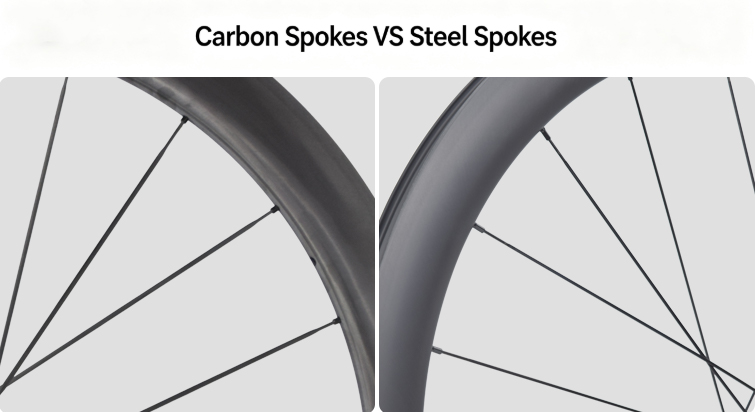
Steel spokes have long been the standard choice for bicycle wheels. Manufactured from high‑tensile‑strength steel alloy, they deliver balanced performance at a reasonable price. Steel spokes offer great impact tolerance. When hitting potholes or rocks, steel spokes bend instead of snapping instantly. Replacement parts are widely available globally, which is a huge advantage for long‑distance tours.
Carbon spokes are a modern upgrade option. Made of advanced carbon‑fiber composite material, they drastically reduce overall wheel weight. Less rotating mass brings snappier acceleration and more direct power transfer during sprints and climbs. Carbon spokes also cut down wheel vibration, offering a smoother riding experience. However, carbon spokes are more brittle under sharp heavy impacts, and spare parts are less accessible in local bike shops.
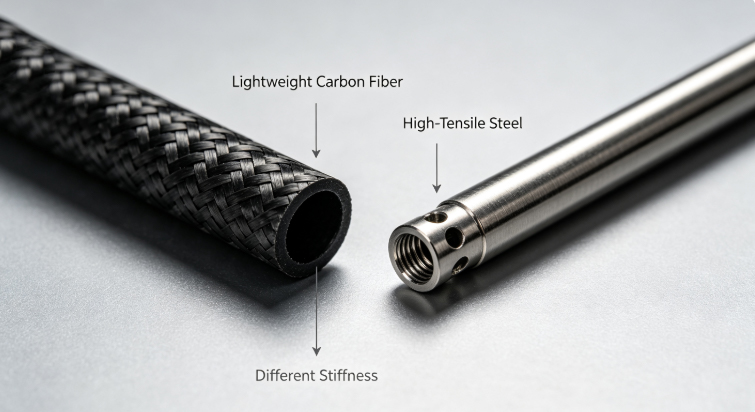
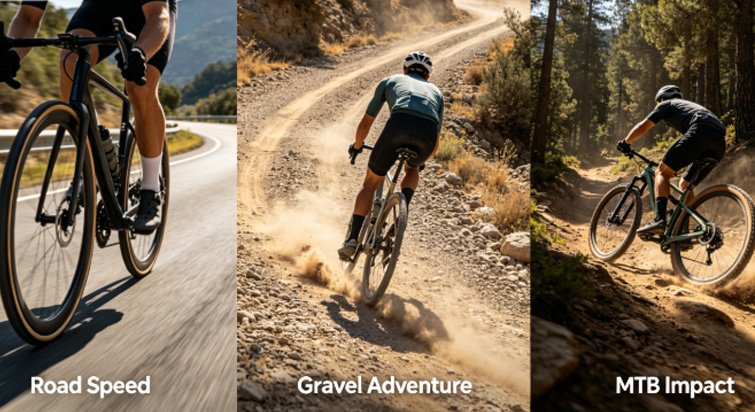
For road cyclists focused on speed and racing, carbon spokes shine. Reduced rotating weight improves climbing and sprint performance on paved roads. Riders participating in road races and gran fondos will feel noticeable performance gains.
For daily commuting and long‑distance road touring, steel spokes are more practical. They stand up to frequent road hazards, and broken spokes can be replaced easily in most cities. You will not face trouble finding repair service during cross‑country trips.
Gravel terrain is mixed. Competitive gravel racers often pick carbon spokes for lightweight and stiff power transmission. Still, riders must accept higher risk of damage on extremely rocky trails.
Recreational gravel adventurers are better off with steel spokes. Steel spokes survive constant bumping from stones and rough backroads. Lower repair cost is critical for off‑grid gravel expeditions.
Aggressive downhill and enduro mountain biking puts wheels under huge impact loads. Most professional downhill setups still prefer steel spokes. Sudden heavy strikes may crack carbon spokes, creating safety risks in brutal trail conditions. Carbon spokes work for light‑weight cross‑country mountain biking only.
Carbon‑spoke wheelsets carry a higher upfront price tag. Beyond the initial purchase cost, after‑sales maintenance deserves attention. Carbon spokes cannot be bent back into shape; once damaged, they require full replacement. Spare carbon spokes are specialty parts and often need to be ordered directly from wheel manufacturers.
Steel‑spoke wheels are more budget‑friendly. Local bike mechanics can perform truing and spoke replacement everywhere in the world. If you plan to use your bike for world travel or remote‑area riding, steel spokes lower your long‑term maintenance stress.
Choose carbon spokes if:
Choose steel spokes if:
Explore our complete selection of carbon wheelsets available with both carbon spokes and steel spokes options. Our wheel lineup covers road, gravel and cross‑country MTB models, compatible with HG and XDR freehub bodies. Every wheelset passes strict lab impact testing. Bike Wheelsets Collection >>
A1: Carbon spokes do not break under normal riding force. But they are vulnerable to sharp heavy impacts such as violent rock strikes or crashes. Avoid hard side impacts to keep carbon spokes intact.
A2: It is not recommended. Carbon spokes and steel spokes have different stretch and stiffness properties. Mixed setup will ruin wheel balance and tension distribution, shortening wheel service life.
A3: Most regular bike shops do not stock carbon spokes. You will need to order matching original carbon spokes from your wheel supplier.


Eine Nachricht hinterlassen
Scannen Sie den QR-Code zu WeChat :

Scannen und zu WhatsApp senden :

 IPv6 NETZWERKUNTERSTÜTZT